Sunday, August 15, 2010


Wednesday, July 14, 2010
High-Powered Air Guns. No good reason.

Just look at this weapon. All the factors to make a gun nut cream himself. A pistol gripped, bi-poded, noise suppressed, scoped, single action sniper rifle. Described by the merchant as "The Gunpower Storm. A high-performance take-down hunting rifle which also serves as an accurate target shooting gun". Its all yours from www.guncity.co.nz for $1,999.00 including GST plus postage and packaging. No licence needed. Just flash your id and this killer is yours. This is an example of the high-powered air rifles that have received coverage due to the two recent homocides of the Don Wilkinson and Keith Kahi.
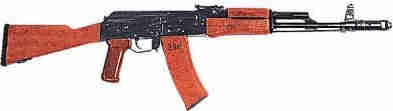
 As you can see these are definitely not your average bb gun for shooting cans. I have commented on Gun-City before. This store, based in suburban Christchurch prides itself on being "New Zealand's Largest Gun Dealer". They import and sell by mail-order restricted military style semi-automatics to holders of endorsed licences, this I have only a little beef with, if a gun nut is willing to undergo the police vetting and individual registration required for the endorsement they are likely to be collectors who will use and store them safely. My BIG beef with them is their sale of military style weapons that have been modified just enough to be sold to persons with a standard licence (over 16, no police record) and are not required to be registered with the police. The weapons, like this modern AK-47 below, are from the factories as their military cousins, they have a shorter magazine and the pistol-grip (not removed as you can see) is incorporated into the stock those are the only modifications. Do you really want kids marching through high-schools with one of these? There is no good reason for owning these, if you want to hunt deer, buy a hunting rifle.
Criminal's will use what they can get. Hence the use of the traditional kiwi sawn-off .22 for pub, dairy and bank robberies. These high-powered pre-charged air-rifles are just the next step up and look a hell of a lot more dangerous than, and are, a 50 year old rabbit gun stolen from a farm-house. The next level of escalation will be to these unregistered assault weapons.
The last time our gun laws were revised was post-Aramoana. I hope this week's two tragic episodes, the death of Keith Kahi in Auckland, the Christchurch slaying of Gage the police dog, will bring to gun-control to the forefront of political debate and the need to make changes to the availability of all firearms to the public. My big wish is for the sale of assault style weapons to be banned before too many are out and about in our communities. And prevent another Aramoana or heaven forbid a Columbine. I wonder if the folk at Gun-City ever listen to the Mutton Birds song, a thing well made, this tells the story of a Christchurch gun dealer going about his work in the early 1990's. The collector down the line was D.M. Gray and this is his AK-47.
so I do the mail orders
there's nothing much
 some oilskins and a 303
for a hunter over in Westland
and oh yeah
one of those AK-47s
for some collector down the line
-A thing well made: Don McGlashen
Peace,
Tony.
Tuesday, July 13, 2010
Antidepressants make shrimps see the light
Antidepressants make shrimps see the light
Maybe these shrimp or sea monkeys will make an interesting alternative model to determine antidepressant effects. It certainly has to be cheaper than using mice! Are there other advantages?
 The standard measures in mice are related to despair behaviour which include tail-suspension and forced-swimming time. Both of these look at how long it takes for the animal to give up, sit and hang still or stick out their legs and float. Drugs or gene manipulations with antidepressant actions increase the time of these escape related movements. Other more sophisticated studies have looked at despair in relation to chronic-social defeat, where a little boy-mouse is exposed to a larger more aggressive man-mouse. This pattern of early life stress leads to the animal developing a phenotype similar to human depression. They stop enjoying their sweet treat biscuits (often froot-loops), groom less frequently and are less interested in hanging with other mice or use their cage toys. These paradigms are challenging to set up and require continuous dosing for ~2weeks.
In that we understand so little about the mechanisms of action of antidepressants is it about time we go back to basic models? These shrimp move towards the light. Other folk have shown the microscopic worm C. elegans changes the way it moves his snout. What more can we learn from these simple, highly-tuned organisms, about drugs which are used to treat people experiencing their darkest times?
Maybe these shrimp or sea monkeys will make an interesting alternative model to determine antidepressant effects. It certainly has to be cheaper than using mice! Are there other advantages?
 The standard measures in mice are related to despair behaviour which include tail-suspension and forced-swimming time. Both of these look at how long it takes for the animal to give up, sit and hang still or stick out their legs and float. Drugs or gene manipulations with antidepressant actions increase the time of these escape related movements. Other more sophisticated studies have looked at despair in relation to chronic-social defeat, where a little boy-mouse is exposed to a larger more aggressive man-mouse. This pattern of early life stress leads to the animal developing a phenotype similar to human depression. They stop enjoying their sweet treat biscuits (often froot-loops), groom less frequently and are less interested in hanging with other mice or use their cage toys. These paradigms are challenging to set up and require continuous dosing for ~2weeks.
In that we understand so little about the mechanisms of action of antidepressants is it about time we go back to basic models? These shrimp move towards the light. Other folk have shown the microscopic worm C. elegans changes the way it moves his snout. What more can we learn from these simple, highly-tuned organisms, about drugs which are used to treat people experiencing their darkest times?
Thursday, April 22, 2010
Predicting clinical response to medicines in psychiatry by genetics and inflammatory markers in blood
 A number of you know that when I am not at medical school I into the proverbial phone booth and become "neuroscience man". Over the last year or so some of the fruit of my labours are ripening and a couple of papers have come of it.
The focus of my thesis has been more flood light than laser. During the last four years I have studied the ability of peripheral markers to explain aspects of the presentation of depression and predict the outcome of the treatment. I have also been looking at the genetics of personality, the genetics of psychotropic drug-induced appetite change and the bulk of my work lately revolves around giving antidepressants to rats and screening the mRNA expression all of the ~30,000 rat genes in their blood to identify candidate biomarkers for human trials.
.jpg) But? you ask. "But depression is a brain disease why look in the blood?" the reason is clear for us. To have any chance at realistically developing tests in the clinic to be used by prescribers, GPs and Psychiatrists, you cannot have them expect to tell the patient "in order to better manage your mood disorder, I am going to need a small slice of your hippocampus". Oh dear! Better to ask "now we need a 5ml blood sample to help us predict what treatment is best for you". Much nicer.
But? you ask. "But depression is a brain disease why look in the blood?" the reason is clear for us. To have any chance at realistically developing tests in the clinic to be used by prescribers, GPs and Psychiatrists, you cannot have them expect to tell the patient "in order to better manage your mood disorder, I am going to need a small slice of your hippocampus". Oh dear! Better to ask "now we need a 5ml blood sample to help us predict what treatment is best for you". Much nicer.To those that were keen to see our recently published papers in the Journal of Pharmacology here they are:
Orosomuciod influences antidepressant response
Elevated CRP predicts good outcome for antidepressant treatment and poor to psychotherapy.
The other paper that we have recently gotten out there is this one in Acta Neuropsychiatrica:
Polymorphism upstream from INSIG2 influences response to carnitine in valproate-induced weight gain
Tuesday, April 06, 2010
Mess with your mind and play with your heart.
Internal organs don't get good press as childrens toys. Too icky, bloody and gross. The wonderful people at iheartguts.com have created and sell wonderful cute playthings of all your favourite vicsera.


Friday, March 26, 2010
Keen to be involved?
Make sure you join the i *heart* brains facebook group.
And here is the latest incarnation of the i*heart*brains t-shirt
http://www.zazzle.co.nz/iheartbrains/gifts
And here is the latest incarnation of the i*heart*brains t-shirt
http://www.zazzle.co.nz/iheartbrains/gifts
New Ideas in Neuroscience
Hey there,
Do you ever get a great idea (or an idea you THINK is great) for a neuroscience research project but don't have the time, background, resources or inclination to go and do it? I know I do. And once the idea is abandoned that's it, over rover for that concept. What if you had shared the idea with someone? Mightn't they be able to give an independent view of how "great" it is? If it is great, then maybe some of those you have shared with do have the time, background, training, resources and the enthusiasm to carry through to develop and test the idea towards completion. i*heart*brains is a forum that enables the sharing of neuroscience ideas to this end, allowing new concepts to be shared, discussed and potentially acted upon by experimental and theorical neuroscientists.
Ideally I*Heart*Brains would become a resource for generation new ideas for grant applications, student projects and new collaborations. What do you think? Is the neuroscience world ready for the free sharing of ideas. In this context I cannot see a reason to not. The thoughts and concepts that we generate every day which subsquently are forgotten, stuffed deep in the filing cabinet or scrawled in a notebook deserve to expanded upon, discussed and informally archived.
Best wishes to you all,
Tony.
Do you ever get a great idea (or an idea you THINK is great) for a neuroscience research project but don't have the time, background, resources or inclination to go and do it? I know I do. And once the idea is abandoned that's it, over rover for that concept. What if you had shared the idea with someone? Mightn't they be able to give an independent view of how "great" it is? If it is great, then maybe some of those you have shared with do have the time, background, training, resources and the enthusiasm to carry through to develop and test the idea towards completion. i*heart*brains is a forum that enables the sharing of neuroscience ideas to this end, allowing new concepts to be shared, discussed and potentially acted upon by experimental and theorical neuroscientists.
Ideally I*Heart*Brains would become a resource for generation new ideas for grant applications, student projects and new collaborations. What do you think? Is the neuroscience world ready for the free sharing of ideas. In this context I cannot see a reason to not. The thoughts and concepts that we generate every day which subsquently are forgotten, stuffed deep in the filing cabinet or scrawled in a notebook deserve to expanded upon, discussed and informally archived.
Best wishes to you all,
Tony.
Subscribe to:
Posts (Atom)

